Webinar – The impact of Brexit on GDPR obligations for Belgian and Luxemburg companies

EDPO (European Data Protection Office) and BLCC are pleased to invite you to the following webinar to be held on 1st June at 10am (London) / 11am (Brussels):
The Impact of Brexit on the GDPR obligations for Belux companies
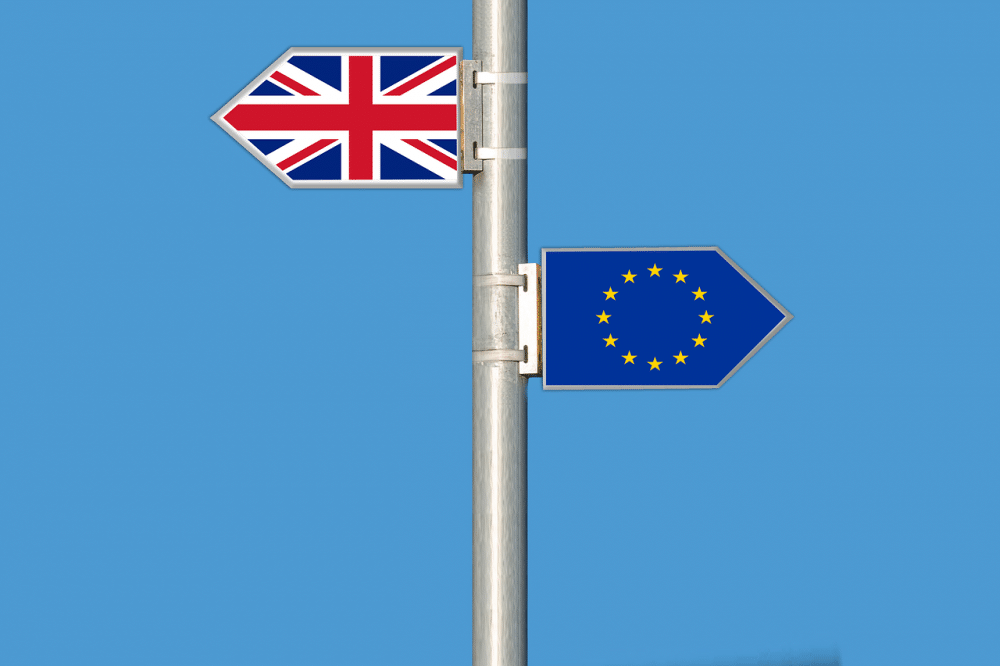
As part of the new trade deal, the EU agreed to delay transfer restrictions of personal data until 30 June 2021 (known as “the bridge”). As this new transition period is coming to an end, this webinar is the opportunity for Belux companies to understand what safeguards they should put in place before the end of June, and what regulations are already applicable since Brexit!
Find out:
– if the UK GDPR applies to your company if you export products or services to the UK;
– how to avoid breaching rules in the event that the EU does not grant the UK an adequacy decision (i.e. an authorisation to freely transfer personal data from the EU to the UK);
– if there are any new data protection rules following Brexit;
– if you need to appoint a UK Representative if you do business with the UK but are based in Belgium or Luxemburg.
Our guest speakers, Jane Murphy (Founder and Chair of the Board at EDPO) and Romane Geurts (Data Protection Representative at EDPO) will discuss the burning issues of Brexit and the GDPR with concrete examples.
Please register here for this free event. A link with access to the webinar will be sent out.

EDPO at the 38th Privacy Laws & Business Conference in Cambridge
From AI governance to legal design: key takeaways from Europe’s leading privacy event EDPO recently took part in the 38th International...
IAPP Intensive – London, UK – March 2023
DAY 1 The IAPP - International Association of Privacy Professionals Data Protection Intensive: UK 2023 kicked off this Wednesday with John...
EDPO participated in the Belgian Economic Mission to Japan – Dec. 2022
EDPO is thrilled to have been part of the Belgian Economic Mission to Japan with HRH Princess Astrid of Belgium last week - and what a crazy...
Follow us on Linkedin for daily breaking GDPR news!
The General Data Protection Regulation (GDPR) continues to apply to many US companies in 2025, even if they do not have a physical presence in the European Union. Despite years of guidance and enforcement, the same misunderstandings keep reappearing. Here are five of the most common GDPR mistakes US companies make — and how to avoid them.
Mistake 1 – Confusing the Data Protection Officer (DPO) with the EU GDPR Representative
An EU GDPR Representative is a local contact point for data protection authorities and individuals in the EU. Non-EU companies that are subject to the GDPR must appoint a representative to ensure smooth communication and compliance.
A Data Protection Officer (DPO) is responsible for overseeing a company’s internal data protection strategy and ensuring compliance with the GDPR. The DPO monitors data processing, conducts audits, and trains staff.
The DPO works inside the organisation, while the GDPR Representative is based in the EU and acts as an external contact point. Many US companies confuse the two roles, but under the GDPR, they are separate obligations and sometimes both are required.
Mistake 2 – Misunderstanding the extraterritorial scope of the GDPR
The GDPR applies to non-EU companies if they offer goods or services to individuals in the EU or monitor their behaviour online. This applies regardless of where the company is located.
Selling products to EU customers, operating an EU-facing website in EU languages, accepting payments in euros, or tracking EU visitors with cookies or analytics tools can all trigger GDPR obligations.
Mistake 3 – Incorrectly relying on the Privacy Shield (now EU-US Data Privacy Framework)
The Privacy Shield was an agreement that allowed certified US companies to transfer personal data from the EU to the US. In 2020, it was invalidated by the Court of Justice of the European Union in the Schrems II decision.
In 2023, the EU-US Data Privacy Framework (DPF) replaced the Privacy Shield. While participation in the DPF can help facilitate transatlantic data transfers, it does not exempt companies from GDPR compliance.
US companies must ensure that data transfers are lawful under the GDPR. This may involve joining the DPF, using Standard Contractual Clauses (SCCs), or implementing other approved safeguards.
Mistake 4 – Incomplete or unclear privacy policies
The GDPR requires privacy policies to be clear, accessible and transparent. They must explain what personal data is collected, how it is used, the legal basis for processing, and the rights of data subjects.
Many US companies omit details such as data retention periods, contact information for the EU Representative, or instructions on how to exercise data subject rights.
Mistake 5 – Underestimating GDPR fines and enforcement
Data protection authorities have issued fines to companies of all sizes, including non-EU businesses. In 2025, penalties for non-compliance remain high — up to €20 million or 4% of annual global turnover, whichever is higher.
Regular compliance reviews Data Protection Impact Assessments (DPIAs), staff training, and appointing an EU GDPR Representative can help mitigate risks.
How EDPO can help your business stay GDPR compliant
EDPO acts as your official EU GDPR Representative, ensuring compliance with Article 27 of the GDPR and facilitating communication with EU authorities.
For companies targeting the UK market, EDPO also offers UK GDPR Representative services to ensure compliance with the UK’s data protection regime.